Showing posts with label Kadamba. Show all posts

Noble Persian in Service of Kadamba Maharaja in Ancient Gandhara

During clearance of storage boxes in the Museum für Indische Kunst, Berlin, Dr Caren Dreyer came across a bunch of old photographs taken by Mr G.W.Leitner in the Museum of Lahore at the end of the 19th century. Most of the pictures show well-known Kharosti epigraphs. The few Brähmi epigraphs are likewise well-documented. One picture, however, labelled 'VIII 10159' shows a rectangular stone-slab of about 60x20 cm length, never before presented in photography.

Some time before 1911 an estampage was made and in that year sent to the office of the Govemment Epigraphist for India by G.A. Wathen, Curator of the Lahore Museum.  In 1919, D.R. Sahni (1920) wrote a note on 'Unpublished inscriptions in the Central Museum, Lahore'. At least for this and three more pieces he seems to have seen only the rubbings, not the objects themselves. He reported on its origin «in a spring tank three miles from Abbottabad» , probably based on the notes sent by Wathen. Abbottabad is about 60 km north-east of Taxila and can be regarded as part of the cultural sphere of Gandhära, although the area today called Hazara is situated geographically at the periphery of it.

It was only in 1953 that D.C. Sircar, then Chief Epigraphist, came to see the rubbing. He published the rubbing together with his reading, referring to the fragmentary decipherment as found in Sahni's note. He dates the inscription on paleographical grounds as 3rd century AD. The Inscription came in four lines as below.

Inscription
sa(m}) märgasira di pratha kärito ya
kumärasthanam gasurana makaputrena
säpharena mahäriija-kadambeSvaradäsa-ra(?)[e?]
data(h}) bhak{s}a(h})


means
Year 25, first day of Märgasirsa, this place for Kumära was caused to be made by
the Gasura saphara, son of Maka, [during the reign?] of the Mahäräja [calIed] the
'Servant of the Lord of the Kadamba[ -tree]'.
Food has been provided

Maharaja kadambesvaradasa
Sircar equated the King kadambesvara to be a Kushan king and tried to fit into kushan chronology. But left it off without any further additions.

We can see here that Kadambesvara is Kadamba king of South India. Kadambas worship kadamba Tree. So Kadambesvara dasa can only mean Kadambas of Banvasi. But Kadambas ruled in South India about 2000km from Abottabad. Now does the inscription says king is servant of the person, No it says the lord of the person who gave the inscription is kadamba king. Did kadamba rule extended to Afghanistan. That possibility looks remote.
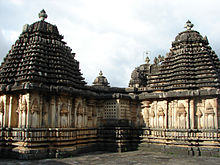
Now let us come to the early part of the inscription. It says Saphara built temple of kumara (kumarasthanam). Kumara is other name of karthikeya. Now kathikeya or Shanmuga or skanda has special place in the kadamba kingdom. In Mahabharata mother of Karthikeya is venerated as Kadamba. Kadamba inscripton speaks of skanda from Kadamba tree helped to establish the dynasty.

Now kadambas are well known from the times of Mayuravarman. Mayuravarman alludes to Karthikeya, whose sign is peacock feathers. Kadamba inscriptions talk about their diety as skanda, karthikeya, Mahasena all denoting the kumara.

Gasurana
The spelling admits to versions, Gasurena, Gasuranam, Sircar said the inscription says Gasurana. The Term is Gasura is also spelled Gusura, Gosura or Gausura. Gusura comes from documents of Central Asia. Documents says high souled (noble) Gausuras and Servants of kings. First group is higer than later. Luders points out gusura mahatvana found in Niya Documents, regarded the highest titles in the area. Burrow says to H W Bailey, that Gusura means son of the house from Aramic and Avesta texts. H W Bailey rather than pointing out says its military rank and points to inscription from Swat by senavarman of Odi in reference to Kujula Kadphises. So Gausrana seems to either nobleman or leader of some rank.

Makaputra
Maka in kannada means Son. But here it seems to denote son of maka. Ancient Magas is well known. We cannot deduce maka is name of father or the clan or country he comes from.

Sapharena
Sapharena is name of the person giving inscription or who established the kumara temple. Sims-williams says it Saphar as name from Rabatak inscription. Now the name ends with phara, which is persian farnah similar to Gondophernes. So it indicates Persian or Iranian Background.

What does it say
The Inscription presents a highborn soldier or Knight, who is probably leader of group of soldiers. He must have been in service of Kadamba Maharaja. The knight installs a place of worship in Hazara for Kumara or Karthikeya, who is regarded as the power to kadamba king.

Significance
1. Soldiers from Northwest India (Afghanisthan), Perisa, Central Asia came to serve under leadership of Kadambas.
2. It talks about leadership qualities of Kadambas
3. Even after he goes back to his native place, he still considers to his master and dates inscription to the year of the king.
4. The kind of devotion shown by kadamba to Karthikeya , that person from different background, religion, language takes the faith of the kadamba ruler.
5. This inscription marks the beginning of the end of Karosthi and start of Brahmi inscriptions or replacement of Karosthi by Brahmi.
6. The Inscription marks the beginning of sanskrit replacing Prakrit.
7. Skanda cult was very popular in Northwest, but here the kadambas are held high on this regard replacing the local tradition.
8. The Name Hazara is derived from Urasha. Did the name came from kannada word UR (meaning from city). Did Sapharena renamed his region as URs from kannada.

Conclusion
Kadamba king did not go to Abbottobad to make the inscription, but his fame has reached this place. The Noble soldier in service of the kadamba king still revers the king he served even after 25 years of service and creates the temple to kartikeya worshipped by his lord kadambesvara. This shows the great Personality , Leadership, Character  of Kannada king, that person of foreign origin, born with different background, takes him as his lord, eventhough he is far removed and years have passed, out of free will with no swords dangling on him in the age of no TV, Radio or Internet. That is true character.

Source
Six Early Brahmi Inscriptions of Gandhara by Harry Falk
Studies in the religious life of ancient and medieval India By Dineschandra Sircar

Images
Wiki
hazarapeople 
srilaxminarayanmandir 

Related Topics 
Karnatka and Persia (Iran)
Buddhist Legacy
Kannada Kings
Topics 

Earliest Full Length Kannada Inscription

Although  Kannada words in abundance have been found in edicts and inscriptions prior to the Christian era in places like Ashoka Edicts  and as far as Egypt, The Earliest Known Full length inscription in kannada is said to be Halmidi Inscription. Full length inscription means inscriptions in sentence and paragraphs in Kannada not just few words.  Halmidi inscription is put at around 450 AD. We are now becoming aware of inscriptions which are challenging the earliest known Full length inscription in Kannada Tag. Dr.S Shettar claims that there are five to six inscription in kannada that are older than Halmidi. Let us see them

Halmidi Inscription

The inscription was discovered in 1936 by Dr. M. H. Krishna, the Director of Archaeology in Mysore (Karnataka state of India), in Halmidi, a village in the Hassan taluk. The inscription is written on a stone pillar 4 feet high. The Inscription written in pre-old-Kannada or Purvada Hala Kannada. The content refers to king Kakusthavarma of the Kadamba dynasty. Further it makes a mention of a war between the Kadambas and the Pallavas in which a brave soldier Vijarasa distinguished himself. He was given a grant of two villages Halmidi and Mulavalli as Balgalchu. It is a form of a gift in which the sword used by the hero for killing the enemies is ceremoniously cleaned and worshipped and the grant made thereafter.The Insc Text is given below the post and there is lot of information on the net, so we are not going in details into this inscription.

Tamatekallu inscription

5th century Inscription in Tamatekallu in Chitradurga dist is one more in contention. Govind Pai observed the extensive use of sanskrit words in Kannada Stanza inscribed there and hazards a guess prior to the adoption of Sanskrit words there must have been a fairly long period of literary composition when native kannada in vogue.


Chandragiri Inscription

Dr.M.G.Manjunath, epigraphist, an authority on "Nishadi"(Sallekhana Samadhi or Nishadi Memorials) inscriptions deciphered "Gunabhushitana nishadi Shasana" one of the 271 inscriptions on Chandragiri hill outoff 800 odd inscriptions in sharavanabelagola. He Concluded Nishadi is the oldest known kannada inscription dating to 400AD. After a detailed study and based on palaeographical and linguistic inferences, Dr.Manjunath dated the inscription to first half of 400AD. Dr.Manjunath figured out after in-depth study that the inscription contained Prakrit, Sanskrit and Purvada Halegannda words. There are no prakrit words in Halmidi inscription. The four lined inscription is in satavhana brahmi and Aadi Ganga Script. M.Chidanandamurthy, kannada Scholar agrees with the findings and puts the inscription older than Halmidi inscription by 50 to 100 years.


Tagarthi Inscription

Tagarthi inscription by Gangas in Shimoga District is dated prior to Halmidi by Dr.S.Shettar.  According to Shettar, the Ganga dynasty controlled most of southern India, including current-day Shimoga, by the middle of the third century. “The inscription found at Tagarthi in Shikaripura taluk of Shimoga district dates back to the same period,” Shettar said. “Tagarthi is well within the Gangavadi region.” Targarthi is a mix of three different scripts, Brahmi, Nagari and Kannada scripts.Dr. S Shettar claims that Tagarthi inscription is much older than Halmidi inscription, dating back to 350 AD. Dr.Shettar says that Tagarthi inscription is in kannada form  earlier than purva-hale-Kannada. 

Coins

Kadamba Coins

Some early Kadamba Dynasty coins bearing the Kannada inscription Vira and Skandha were found in Satara dist in Maharastra.  A gold coin bearning three inscriptions of Sri and an abbreviated inscription of king Bhagiratha’s name called bhagi (390-420 CE) in old Kannada exists. These coins prove that Kannada was Administrative language in 4th century Itself. We have seen another article on kannada being third Indian admin language after Prakrit and Sanskrit. We have abundant number of Pre-Kadamba coins in Karnataka in Prakrit.


Satavahana Coins

The coin was discovered recently by numismatist Mukunda Prabhu of Mangalore. On one side of the coin, there is an inscription ‘Srimanaragi’ in Kannada script and on the other side, the symbol of Ujjayini is inscribed, says Dr Gopal, director, Department of Archaeology and Ancient History. According to him, the letter ‘Srimanaragi’ is perhaps the name of a king or a title given to somebody. This is one of the oldest copper coins discovered having the inscription in Kannada script, he says. Notably, it is believed that Banavasi had a ‘Tankashale’ which produced coins having Kannada script.

Recent discovery of a copper coin dated in Banavasi, Uttara Kannada district with the Ujjain Symbol one side and inscription Srimanaragi in Kannada script proves that Kannada had become an official language of Chutus, Satavahana times as well. While Chutu dynasty was restricted to South India. Ujjain Symbol shows that the coin can be Satavahana / Satakarni Coins, who controlled much of India. Which could mean Kannada was official language of Whole of India. We need to search for inscriptions in  Kannada by Satakarnis / Satavahanas especially in Maharastra / Goa area.

Indology scholars have been saying Kadambas and Gangas are the first Kannada Dynasties becuase they used Kannada. But here we have proof that Chutus, Satakarni / Satavahanas have used kannada in administration born by proof of this coins.  This also proves that Kannada words in Ashoka Edicts in Karnataka is no fluke, but due to admin language of the area being Kannada. It has to be noted that apart from Prakrit, Greek and Aramic words, only other language word  in Ashoka Edict is Kannada none else not even Sanskrit.

Halmidi Inscription

The pillar on which the inscription was written stands around 4 feet (1.2 m) high. Its top has been carved into an arch, onto which the figure of a wheel has been carved, which is probably intended to represent the Sudarshana Chakra of Vishnu.The following lines are carved on the front of the pillar:

1. jayati śri-pariṣvāṅga-śārṅga vyānatir-acytāḥ dānav-akṣṇōr-yugānt-āgniḥ śiṣṭānān=tu sudarśanaḥ
2. namaḥ śrīmat=kadaṁbapan=tyāga-saṁpannan kalabhōranā ari ka-
3. kustha-bhaṭṭōran=āḷe naridāviḷe-nāḍuḷ mṛgēśa-nā-
4. gēndr-ābhiḷar=bhbhaṭahar=appor śrī mṛgēśa-nāgāhvaya-
5. r=irrvar=ā baṭari-kul-āmala-vyōma-tārādhi-nāthann=aḷapa-
6. gaṇa-paśupatiy=ā dakṣiṇāpatha-bahu-śata-havan=ā-
7. havuduḷ paśupradāna-śauryyōdyama-bharitōn=dāna pa-
8. śupatiyendu pogaḷeppoṭṭaṇa paśupati-
9. nāmadhēyan=āsarakk=ella-bhaṭariyā prēmālaya-
10. sutange sēndraka-bāṇ=ōbhayadēśad=ā vīra-puruṣa-samakṣa-
11. de kēkaya-pallavaraṁ kād=eṟidu pettajayan=ā vija
12. arasange bāḷgaḻcu palmaḍiuṁ mūḷivaḷuṁ ko-
13. ṭṭār baṭāri-kuladōn=āḷa-kadamban kaḷadōn mahāpātakan
14. irvvaruṁ saḻbaṅgadar vijārasaruṁ palmaḍige kuṟu-
15. mbiḍi viṭṭār adān aḻivornge mahāpatakam svasti
The following line is carved on the pillar's left face:
16. bhaṭṭarg=ī gaḻde oḍḍali ā pattondi viṭṭārakara


Sources

Wiki 
Govind Pai By M. Thirumaleshwara Bhat, Neerkaje Thirumaleshwara Bhat
Halmidi -The earliest Kannada inscriptionHistorian’s study pushes earliest record of Kannada writing back by a century 
Mysore scholar deciphers Chandragiri inscription
5th Century copper coin found at Banavasi
Coin Network 
Wikimedia
Two hero stones of Chitradurga 

Related Posts

Early Rashtrakutas

When dealing with History, Suddenly we see Rashtrakutas defeating Chalukyas and forming an empire. An Empire at one time stretched from Himalayas to  Srilanka. Is it possible for someone to build an empire immediately coming to power. So we start digging and we come across Early Rashtrakutas.

History from Plates
Undikavatika grant (Royal Asiatic Society, Bombay)of Abhimanyu residing at Manapura calls himself Rashtrakuta and also gives geneology. Indology scholars confused these early rashtrakutas with kings of Sarbhapura and for decades disimissed the Rashtrakuta rule.

Then Pandarangapalli plates (Mysore Archeological Survey) were discoverd in Kohlapur. It gives geneology of Mananka, Devaraja, Avidheya. Dr.Krishna of Mysore Archeological Survey identified Avidheya as the third son of Devaraja. He also said that Devaraja, son of Mananka has three sons. Avidheya, Jayaraja, Bhavisya. Between the sons the extensive Rashtrakuta empire stretching from Mahanadi and Tapti to Bhima comprising of three Maharastras were divided. Jayaraja was ruling over parts of Mahanadi, Bhavisyas over Northern Maharastra and Avideya over Southern Maharastra and Northeastern Karnataka.

Krishna son of Indra and Govinda who are mentioned as defeated by chalukya jayasimha and Pulakesin II of Badami belong to this family. Overthrowing them Pulakesin II become lord of three Maharastras.

However Altekar of Bhandarkar Institute dismissed the vast empire of Rashtrakuta, claiming that many kings do not call themselves Rashtrakutas and other kings such as Nalas, Mauryas, Kalachuris and kadambas were ruling many areas of Maharastra.

Rashtrakuta Empire in 5th century AD ?
First the identification of sarbhapurias of Chattisgarh with Rashtrakutas was disimissed.
Identification of Manamatra with Mananka and Sudevaraja with Devaraja was dismissed.
The Paleography of Inscriptions suggested that Rashtrakuta inscriptions are in Western variety of Brahmi script similar to Satavahana-Kadamba script and Sarbhapuria Inscriptions were box headed script of central India similar to Gupta inscriptions
The Royal emblems are Lion facing Rightside and figure of standing lakshmi with elephant on either side pouring water on her.
Once these identification and differentiation was done, then it became easy to identify the Rashtrakuta Kings. The King Avidheya of Pandaranganapalli and King Abhimanyu of Undikavatika plates belong to same dynasty. They have same geneology starting with Manaka, Devaraja as son (described as lord of Gods (Indra)), Inscribed in Similar Characters, Emblem of Lion facing Right. One gives the family as Rashtrakuta other is silent. But that is not rare.

Extend of Empire
Now where they ruling different regions. Avidheya was ruling southern Maharastra and Northern Karnataka. Bhavisya was ruling over Northern Maharastra and southern Madya pradesh. The Pandaranganapalli plates gives Mananka as glorious ruler of Kuntala, Conquered Asmaka(godavari Valley) and Vidarbha. The Capital was Manapura, which is today Man(satara Dist), throughwhich Manganga(tributory of Bhima) flows. Another Copper plates from Sisodra in Goa mentions Devaraja father of Chandravarman of gomins. There are many theories on this. This devaraja may be different from Rashtrakutas, Rashtrakutas were originally Gomins etc. This record shows that Devaraja held sway over South Konkan also. So the theory of big Rashtrakuta Empire in 5th century AD  is tenable.


Period of Rashtrakuta rule
Mr. Krishnamacharlu who edited Sisodra Plates says the characters resemble Mayidavolu plates of Pallava Sivaskandavarman. He also draws to certain Prakrit expressions found on the grant. Which puts the plates to 3rd or 4th century AD. Now Pandaranganapalli and Undikavatika plates are put at 5th century AD. The grants themselves gives jovian year of Bhadrapada. This does not happen after 5th century AD in South India. So Rashtrakutas started as contemproaries of Trikutakas(ruling over North Konkan, Gujarat and North Maharastra) and Vakatakas (ruling Vidarba). They were lords of Kuntala, because Mananka started as ruler of Kuntala.

 Dejja Maharaj is also from this family, who gave Gokak Plates grant in Belgaum. This record was issued 845 years of Aguptayika Kings expired. This date corresponds to 532-33 AD. There was inscription from Madhavavarman which was also clubbed to Rashtrakutas. But it now certain, it belong to Vishnukundin Madhavavarman. Kalyani Chalukya records reveal Jayasimha of Badami Chalukyas defeated King Indra son of Krishna. We know Govinda who invaded with his troops of elephants at the time of accession of Pulakesin II belong to Rashtrakutas. Aihole inscription state that Govinda Immdiately obtained reward for the services. But Pulakesin soon annexed all the territories upto Narmada. So the Rashtrakuta empire is replaced by Chalukya Empire.

Lords of the Kuntala
Vindhyashakti II of Vatsagulma Vakataka in Ajanta caves Inscription claims to have defeated Lord of Kuntalas. Mananka is found have conquered Vidarbha. So may be it is a battle with no clear victors. So if we put mananka as Contemproary of Vindyashakthi II, then he flourished around 4th century AD. Prithvisena II father Narendrasena Married Ajjhitabhattarika, daughter of Lord of Kuntala. This princess may be of Rashtrakuta Lineage. Harisena last known Vakataka ruler records victory over Lord of Kuntala. This may also be Rashtrakutas. If we identify Rashtrakutas as lord of Kuntala, then Kadambas of Banavasi as being identified as lords of Kuntala goes. Also we find no record of Kadambas in Kuntala.

 Certain passages of Kuntaleshwaradautya, a sanskrit work ascribed to Kalidasa, which has been cited by Kavyamimasa of Rajashekara, Chandragupta II Vikramaditya of Guptas sent Kalidasa as an ambassador to the court of Lord of Kuntala. Kalidasa was not well received here, but he gradually gained kuntaleshwara favour and stayed in the court for sometime. When he returned to Vikramaditya Court , he reported kuntaleshwara spending time in enjoyment throwing responsibility and governance on vikramaditya. This Kuntaleshwara is identified as Vakataka Pravarasena II, But this appears plausible as Vakataka did not rule kuntala, they raided few times sure.

There is original kuntaleshwars of (Chutus)Satakarnis mentioned in Hathimgumpha inscription of Kharvela.  Kharvela has also mentioned to have defeated Rashtrika and Bhojas. Are Rashtrikas the ancestors of Rashtrakutas. We don't know. Rashtrikas and Bhojas are also mentioned in Ashoka edicts. They are roughly ruling the same areas of Maharastra.  Rashtrikas can be pronounced Rattas in prakrit. Rattas as later decendents of Rashtrakutas call themselves. But Rashtrakutas do not link themselves to these Rashtrika.

As Feudatories
Rashtrakutas later moved to Berar where they founded the principality with Acalapura(Elichpur) as their capital. the Tivarkhed Plates of Nannaraja shows family ruling in 631 AD. This gives geneology of Durgaraja, his son Govindaraja, his son Svamikaraja and his son Nannaraja. Altekar gives Approximate dates to them starting with 570AD with twenty years each. When Pulakesin II defeated Kalachuri Bhuddharaja and annexed all territories including, Maharastra, Vidarba, Konkan, Central and Southern Gujarat. He placed his trusted chiefs in thier positions. Sendraka in Gujarat. Similarly he should have placed Svamikaraja in Berar. We can find Nannarja plates resemble Kalachuri records, who preceded them. One thing that has to be noted here is that Early Rashtrakutas were saivites and later Rashtrakutas are Vaishnavites like Chalukyas. The Eagle has replaced Lion as emblem.

Rashtrakuta Empire
Early Rastrakutas
(Rastrakutas of Manapura)
Mananka(Founder) (375-400 AD)
Devaraja (400-425AD)
(Sons - Jayaraja  Bhavisya , Avidheya )
Avidheya
Bhavisya (son - Abhimanyu)
Abhimanyu(440)
Krishna
Indra (Defeated by Chalukya Jayasimha)
Dejja-Maharaja  (A.D. 520-550)
Durgaraja (570-590)AD
Govindaraja(Defeated by Pulikesin II)(590-610)

(Feudatory of Badami Chalukyas)
(Rastrakutas of Achalpura (Elichipur))
(Chalukyas defeated them and shifted them to Achalapura, annexed after defeating Kalachuris)
Svamikraja (610-630)
Nannaraja alias Yuddhasura (630 -650AD)
Dantivarman(650-665AD)
Son Indra
Grandson Govindaraja(665-700AD)
karkkaraja(700 -715AD)
Indra(715-735AD)

(Independent)
(Rastrakutas of Manyakheta)
Dantidurga (735 - 756)
Krishna I (756 - 774)
Govinda II (774 - 780)
Dhruva Dharavarsha (780 - 793)
Govinda III (793 - 814)
Amoghavarsha I (814 - 878) (Shifted Capital from Mayurkhandi to Manyakheta)
Krishna II (878 - 914)
Indra III (914 -929)
Amoghavarsha II (929 - 930)
Govinda IV (930 – 936)
Amoghavarsha III (936 – 939)
Krishna III (939 – 967)
Khottiga Amoghavarsha (967 – 972)
Karka II (972 – 973)
Indra IV (973 – 982)
Place of Origin of Rashtrakutas
 From the Inscriptions we find Mananka founded the rule at Manapura, Which is todays Man in Satara District. The River Manganga, tributory of Bhima flows through this place. They call themselves as Lattalura-puraveshvara , which means lord of the great city of Lattalura (Latur). Latur is not far away from Satara. They might have originated.
Other Claims of origin we have already dealt in the Origin of Rashtrakutas article.

Building an Empire
Dandidurga who was ruliing in Acalapura defeated his failing overlord Kirtivarman II of Chalukyas of Badami. He also installed his father-in-law Nandivarman Pallava to Kanchi throne. Successors to Dandidurga took their empire to great heights.As one historian puts it, the drums of the Deccan were heard from the Himalayan caves to the shores of the Malabar

Sources
The Rashtrakutas of Manapura by V.V.Mirashi ,Annals of the Bhandarkar Oriental Research Institute
Kamat Potpourri :Coins
Clockwise from centre Lions of Goa Kadambas, Harihara II (1377-1404 A.D) of Vijayanagar, Rashtrakuta, Ganga, Badami Chalukya , Alupas of South Kanara ,Kalachuri 

Related 
Origin of Rashtrakutas
Kannada Kings
Rajputs Origin
Kuntala Janapada
Who is Trivaradeva
Date of Kalidasa
Date of Kamasutra
Origin of Marathi
Topics

Sahitya Academy and Pampa Awardees


List of Sahitya Akademi Award winners for Kannada
Sahitya Akademi Award is given each year, since 1955, by Sahitya Akademi (India's National Academy of Letters), to writers and their works, for their outstanding contribution to the upliftment of Indian literature and Kannada literature in particular. A total of 55 Sahitya Akademi Awards have been received by Kannada Writers.

Sahitya Akademi Award winners and their works in Kannada language
1955     Kuvempu     Sri Ramayana Darshanam (Epic)
1956     R. S. Mugali     Kannada Sahitya Charitre (History of Literature)
1958     D. R. Bendre     Aralu-Maralu (Poetry)
1959     K. Shivaram Karanth     Yakshagana Bayalata (A treatise on folk-drama)
1960     V. K. Gokak     Dyava-Prithivi (Poetry)
1961     A. R. Krishnashastry     Bengali Kadambarikara Bankim Chandra (A critical study)
1962     Devudu Narasimha Sastri     Mahakshatriya (Novel)
1964     B. Puttaswamayya     Kranti-Kalyana (Novel)
1965     S. V. Ranganna     Ranga Binnapa (Philosophical reflections)
1966     P. T. Narasimhachar     Hamsa Damayanti Mattu Itara Rupakagalu (Musical plays)
1967     D. V. Gundappa  Shrimad Bhagavadgita Tatparya Athava Jivanadharmayoga (Philosophical expositions)
1968     Masti Venkatesha Iyengar     Sannakathegalu (12-13) (Short stories)
1969     H. Tipperudraswamy     Karnataka Samskriti Sameekshe (Cultural Study)
1970     S. B. Joshi     Karnataka Samskritiya Poorva Peethike (Cultural Study)
1971     Adya Rangacharya     Kalidasa (Literary criticism)
1972     S. S. Bhoosnurmath     Shoonyasampadaneya Paramarshe (Commentary)
1973     V. Sitaramaiah     Aralu Baralu (Poetry)
1974     Gopalakrishna Adiga     Vardhamaana (Poetry)
1975     S. L. Bhyrappa     Daatu (Novel)
1976     M. Shivaram     Mana Manthana (Psychiatric studies)
1977     K. S. Narasimhaswamy     Tereda Baagilu (Poetry)
1978     B. G. L. Swamy     Hasuru Honnu (Travelogue)
1979     A. N. Murthy Rao     Chitragalu Patragalu (Reminiscences)
1980     Gorur Ramaswamy Iyengar     Americadalli Goruru (Travelogue)
1981     Chennaveera Kanavi     Jeewa Dhwani (Poetry)
1982     Chaduranga     Vaishakha (Novel)
1983     Yashwant Chittal     Katheyaadalu Hudugi (Short stories)
1984     G. S. Shivarudrappa     Kavyartha Chintana (Literary criticism)
1985     T. R. Subba Rao     Durgaasthamaana (Novel)
1986     Vyasaraya Ballal     Bandaya (Novel)
1987     Poornachandra Tejaswi     Chidambara Rahasya (Novel)
1988     Shankar Mokashi Punekar     Avadheshwari (Novel)
1989     H. M. Nayak     Samprati (Belles- Lettres)
1990     Devanur Mahadeva     Kusuma Bale (Novel)
1991     Chandrashekhara Kambara     Sirisampige (Play)
1992     S. R. Ekkundi     Bakulada Hoovugalu (Poetry)
1993     P. Lankesh     Kallu Karaguva Samaya (Short stories)
1994     Girish Karnad     Taledanda (Play)
1995     Kirtinath Kurtakoti     Uriya Nalage (Criticism)
1996     G. S. Amur     Bhuvanada Bhagya (Literary Criticism)
1997     M. Chidananda Murthy     Hosatu Hosatu (Criticism)
1998     B. C. Ramchandra Sharma     Sapthapadi (Poetry)
1999     D. R. Nagaraj     Sahitya Kathana (Essays)
2000     Shantinath Kuberappa Desai     Om Namo (Novel)
2001     L. S. Seshagiri Rao     English Sahitya Charitre (Literary history)
2002     S. Narayana Setty     Yugasandhya (Epic)
2003     K. V. Subbanna     Kaviraja Marga Mattu Kannada, Jagattu (Essays)
2004     Geetha Nagabhushana     Baduku (Novel)
2005     Raghavendra Patil     Teru (Novel)
2006     M. M. Kalburgi     Marga - 4 (Essays)
2007     K. Veerabhadrappa     Aramane (Novel)
2008     Shrinivas B. Vaidya     Halla Bantu Halla (Novel)
2009     Vaidehi (Janaki Srinivasa Murthy)     Krouncha Pakshigalu (Short Stories)
2010    rahamat tarikere kathiyanchina daari
2011     Gopalkrishna Pai     Swapna Saarasvata (Novel)
(No awards were given in 1957 and 1963).

PAMPA AWARD
The award is named after the first Kannada poet Adikavi Pampa. The award comprises a cash prize of Rs. one lakh , a shawl, a citation and a memento. However from 2008, cash prize increased to Rs. three lakh. Prior to 1996, the awards were given for a best single work by a Kannada writer. since then, the award has been given to the writer for his lifetime contribution to the Kannada literature. Kuvempu was the first recipient of this award for his work Sri Ramayana Darshanam.The Pampa Prashasti is presented by the Minister of State for Kannada and Culture, during the Kadambotsava, a cultural festival held annually in poet Pampa's town of Banavasi in Uttar Kannada district.

List of Pampa Awardees
Year     Writer     Works
1987     Kuvempu-     Sri Ramayana Darshanam
1988     T. N. Srikantaiah -    Bharathiya Kavya Meemaamse
1989     K. Shivaram Karanth -    Mai Managala Sulliyali
1990     S. S. Bhoosnurmath -    Shoonya Sampadaneya Paramarshe
1991     P. T. Narasimhachar -    Shri Haricharitha
1992     A. N. Murthy Rao-     Devaru
1993     Gopalakrishna Adiga -    Suvarna Puthalli
1994     Sediyapu Krishna Bhatta -    Vichara Prapancha
1995     K. S. Narasimhaswamy -    Dundu Mallige
1996     M. M. Kalburgi -    lifetime contribution
1997     G. S. Shivarudrappa -    lifetime contribution
1998     D. Javare Gowda -    lifetime contribution
1999     Chanaveera Kanavi -    lifetime contribution
2000     L. Basavaraju -    lifetime contribution
2001     Poornachandra Tejaswi -    lifetime contribution
2002     M. Chidananda Murthy -    lifetime contribution
2003     Chandrashekhara Kambara -    lifetime contribution
2004     H. L. Nage Gowda -    lifetime contribution
2005     S. L. Bhyrappa -    lifetime contribution
2006     G. S. Amur -    lifetime contribution
2007     Yashwant V. Chittal -    lifetime contribution
2008     Venkatachala Shastri - lifetime contribution
2011    Champa - Lifetime Contribution
The Kadambotsava was not held in 2009 and 2010 due to natural calamity and controversies, Although Champa was recommended for the award in 2009, he was presented with the award only in 2011

Source
Wiki

Related Posts
Most Jnanapith Awards
Vijnaneshwara - Pioneer Ancient Hindu Jurist
Kannada Literature
Oral Epics
Kannada Grammar Works
List of Kannada Dictionaries
Lost Works of Kannada Literature
Ancient Technical Publications

Kannada – First Administrative Language of South

Kannada is the first Administrative language of south India and third after Prakrit & sanskrit in India (Since Greek and Aramic are used in territories outside India ). This is arrived on the basis of full-length Inscriptions or Grants in the form of Copper plates and others.

First full length Inscription in

Prakrit

230BC

Ashoka Edicts

Emperor Ashoka - Mauryan

both North and South India

Greek , Aramic

230BC

Asoka Edicts.

Emperor Ashoka - Mauryan

Afghanistan and Middle East

Sanskrit

1 Century AD

Mathura Inscription

Sadosa – Indo Scythian

North India

375 - 425AD

Nagarjunakonda Inscription

Ehuvula Santamula – Ikshvaku

Andhra Pradesh

Kannada

450AD

Halmidi inscription

Kakusthavarman – Kadambas

Karnataka

Telugu

575 AD

Erragudipadu , Cuddapah district

Erikal, Muthuraju - Renati Chodas

Andhra Pradesh

Tamil

610AD

cave-temples at Tiruchi and Pallavaram

Mahendravarman I - Pallava

Tamil Nadu

Malayalam

830AD

Vazapalli copper plate Inscription

RajaShekara - Chera

Kerala

Marathi

974AD

Marmuri Copper Plate

Irivabedanga Satyasraya - Chalukya

Maharastra

Hindi

1022AD

Shyopur

Unknown

Madyapradesh

Kashmiri

11th Century AD

Grants

Udai Singh - Chambas

Jammu & Kashmir

Tulu

1200 AD

Alupe Inscription

Kulashekara Alupendra - Alupa

Karnataka

Arabic

12th centuryAD

Grants


North India

Persian

14th century AD

Grants


North India

Oriya

1400AD

Puri Plats

Narashima IV, Eastern Gangas

Orissa

Gujarati

15th century AD

Kathiawar


Gujarat

Bengali

15th century AD

Copper Plates

king Govindamaikya

Tripura

Portuguese

16th Century AD


Goa

Assamese

1630AD

Bhomoraguri Inscription

Pratap Sinha , Ahom King

Assam

Dutch

17th Century AD

Chengulpet


Tamil Nadu

French, English

17th century AD


All over India

Urdu

18th century AD


North India


Sanskrit made its presence felt during Satavahanas ,by the time of Gupta's(4th century AD) it has almost completely replaced Prakrit in North India, After arrival of Guptas to the south it rapidly replaced the prakrit in south also. Sanskrit was used in inscriptions from 4th century AD in Karnataka and Andhra Pradesh and 6th century in rest of south India. Trend of using Full Length inscriptions in Regional Languages along with Sanskrit started from 450AD in Kannada, 575AD in Telugu , 610AD in Tamil and 850AD in Malayalam. Rest of the languages from table.

Kannada Administative Language

Kannada words have been found right from earliest writings of Ashoka. We will consider it a court language when grants are issued or inscriptions are made in that language. Kannada seems to be the official language of Satavahans as lord of kuntala, But Chutu line of Satakarnis used titles in Kannada, which show that it was a offcial language of Chutu's . The Rastrakuta's of Mana used kannada as the official language. Kalidasa who visited their court kuntala seems to be slighted by this and him passing derogatory comments on kannada shows it. But it is Kadmbas who wrote inscriptions and gave official grants in kannada. Chalukyas followed them in giving grants all over their country in Kannada. Pallava's who never bothered to issue grants in Tamil till then followed suit. Rastrakuta's took kannada language to an all India Status. Rastrakuta inscriptions and grants are found all over the India. Susequent Karnata rulers like Mallas( North India & Nepal), Palas& Sena( Bengal) , Ganga (Orissa) , Solanki (Gujarat), Chalukya Cholas ( Tamil nadu) though did not use kannada as the official language in other parts of the country, but kept their kannada titles.
If you see the table it is kannada which breaks the trend. The first use of regional lanuage in their respective domain comes after invasion and occupation by Chalukyas , Rastrakuta and their lineage of kings.