Showing posts with label sanskrit. Show all posts

Noble Persian in Service of Kadamba Maharaja in Ancient Gandhara

During clearance of storage boxes in the Museum für Indische Kunst, Berlin, Dr Caren Dreyer came across a bunch of old photographs taken by Mr G.W.Leitner in the Museum of Lahore at the end of the 19th century. Most of the pictures show well-known Kharosti epigraphs. The few Brähmi epigraphs are likewise well-documented. One picture, however, labelled 'VIII 10159' shows a rectangular stone-slab of about 60x20 cm length, never before presented in photography.

Some time before 1911 an estampage was made and in that year sent to the office of the Govemment Epigraphist for India by G.A. Wathen, Curator of the Lahore Museum.  In 1919, D.R. Sahni (1920) wrote a note on 'Unpublished inscriptions in the Central Museum, Lahore'. At least for this and three more pieces he seems to have seen only the rubbings, not the objects themselves. He reported on its origin «in a spring tank three miles from Abbottabad» , probably based on the notes sent by Wathen. Abbottabad is about 60 km north-east of Taxila and can be regarded as part of the cultural sphere of Gandhära, although the area today called Hazara is situated geographically at the periphery of it.

It was only in 1953 that D.C. Sircar, then Chief Epigraphist, came to see the rubbing. He published the rubbing together with his reading, referring to the fragmentary decipherment as found in Sahni's note. He dates the inscription on paleographical grounds as 3rd century AD. The Inscription came in four lines as below.

Inscription
sa(m}) märgasira di pratha kärito ya
kumärasthanam gasurana makaputrena
säpharena mahäriija-kadambeSvaradäsa-ra(?)[e?]
data(h}) bhak{s}a(h})


means
Year 25, first day of Märgasirsa, this place for Kumära was caused to be made by
the Gasura saphara, son of Maka, [during the reign?] of the Mahäräja [calIed] the
'Servant of the Lord of the Kadamba[ -tree]'.
Food has been provided

Maharaja kadambesvaradasa
Sircar equated the King kadambesvara to be a Kushan king and tried to fit into kushan chronology. But left it off without any further additions.

We can see here that Kadambesvara is Kadamba king of South India. Kadambas worship kadamba Tree. So Kadambesvara dasa can only mean Kadambas of Banvasi. But Kadambas ruled in South India about 2000km from Abottabad. Now does the inscription says king is servant of the person, No it says the lord of the person who gave the inscription is kadamba king. Did kadamba rule extended to Afghanistan. That possibility looks remote.
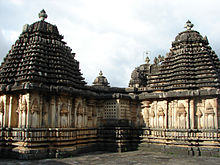
Now let us come to the early part of the inscription. It says Saphara built temple of kumara (kumarasthanam). Kumara is other name of karthikeya. Now kathikeya or Shanmuga or skanda has special place in the kadamba kingdom. In Mahabharata mother of Karthikeya is venerated as Kadamba. Kadamba inscripton speaks of skanda from Kadamba tree helped to establish the dynasty.

Now kadambas are well known from the times of Mayuravarman. Mayuravarman alludes to Karthikeya, whose sign is peacock feathers. Kadamba inscriptions talk about their diety as skanda, karthikeya, Mahasena all denoting the kumara.

Gasurana
The spelling admits to versions, Gasurena, Gasuranam, Sircar said the inscription says Gasurana. The Term is Gasura is also spelled Gusura, Gosura or Gausura. Gusura comes from documents of Central Asia. Documents says high souled (noble) Gausuras and Servants of kings. First group is higer than later. Luders points out gusura mahatvana found in Niya Documents, regarded the highest titles in the area. Burrow says to H W Bailey, that Gusura means son of the house from Aramic and Avesta texts. H W Bailey rather than pointing out says its military rank and points to inscription from Swat by senavarman of Odi in reference to Kujula Kadphises. So Gausrana seems to either nobleman or leader of some rank.

Makaputra
Maka in kannada means Son. But here it seems to denote son of maka. Ancient Magas is well known. We cannot deduce maka is name of father or the clan or country he comes from.

Sapharena
Sapharena is name of the person giving inscription or who established the kumara temple. Sims-williams says it Saphar as name from Rabatak inscription. Now the name ends with phara, which is persian farnah similar to Gondophernes. So it indicates Persian or Iranian Background.

What does it say
The Inscription presents a highborn soldier or Knight, who is probably leader of group of soldiers. He must have been in service of Kadamba Maharaja. The knight installs a place of worship in Hazara for Kumara or Karthikeya, who is regarded as the power to kadamba king.

Significance
1. Soldiers from Northwest India (Afghanisthan), Perisa, Central Asia came to serve under leadership of Kadambas.
2. It talks about leadership qualities of Kadambas
3. Even after he goes back to his native place, he still considers to his master and dates inscription to the year of the king.
4. The kind of devotion shown by kadamba to Karthikeya , that person from different background, religion, language takes the faith of the kadamba ruler.
5. This inscription marks the beginning of the end of Karosthi and start of Brahmi inscriptions or replacement of Karosthi by Brahmi.
6. The Inscription marks the beginning of sanskrit replacing Prakrit.
7. Skanda cult was very popular in Northwest, but here the kadambas are held high on this regard replacing the local tradition.
8. The Name Hazara is derived from Urasha. Did the name came from kannada word UR (meaning from city). Did Sapharena renamed his region as URs from kannada.

Conclusion
Kadamba king did not go to Abbottobad to make the inscription, but his fame has reached this place. The Noble soldier in service of the kadamba king still revers the king he served even after 25 years of service and creates the temple to kartikeya worshipped by his lord kadambesvara. This shows the great Personality , Leadership, Character  of Kannada king, that person of foreign origin, born with different background, takes him as his lord, eventhough he is far removed and years have passed, out of free will with no swords dangling on him in the age of no TV, Radio or Internet. That is true character.

Source
Six Early Brahmi Inscriptions of Gandhara by Harry Falk
Studies in the religious life of ancient and medieval India By Dineschandra Sircar

Images
Wiki
hazarapeople 
srilaxminarayanmandir 

Related Topics 
Karnatka and Persia (Iran)
Buddhist Legacy
Kannada Kings
Topics 

Karnataka Treatises on Music

As the only surviving seat of governance of India(Malwa, Magada and Karnataka) through the ancient times Karnataka empires and kingdoms has been patronising knowledge, Arts and science for over 2000 years. The Karnatic traditions of Music and Dance have been the only surviving forms of what was standardised in Natyasastra. In fact Dattilam contemproary of Bhratamuni Natyasastra tells about Raga Kannada.  The Music that flourished in Royal courts of Karnataka is called carnatic music and Dance form Bhratanatyam.  When Adil Shah's  and  Bhamani kindoms took a piece of karnataka ,they adopted the carnatic music to persian and Arabic tones and we have now Hindustani music. If we say today's Hindustani music is daughter of Carnatic music it will be understatement. Since seeing how Carnatic sangeeta and Bhratanatyam evolved in karnataka is vast topic. I will deal with one topic each. Here I am dealing with list of works on music from karnataka in kannada and Sanskrit.

Brhaddesi Music by Matanga Brhaddesi (5th century AD)

Abhilashitartha Chintamani  By Someshvara (1116-27 A.D)

Sangita Chudamani  By Jagadekamalla(1138-50 )

Sangeeta Sudhakara 

Sangeeta Samayasara  by Parsvadeva

Bharatesavaibhava by Ratnakaravarni (12th Century AD)

Sangita Ratnakara By Sarangadeva Suri (12th Century)

Basavapurana by Palkuriki somanatha

Panditaradhya charitra by Palkuriki somanatha

Sangita Suryodaya By Bandaru Lakshminarayana (16th Century )

Sangita sara  By Vidyaranya

Kalaanidhi  By Chaturakallinatha

Kavya Alankara sutra by Gopenda Tippa

Taladipika by Gopendra Tippa

Sangeeta Suryodaya lakshminarayana

Svaramelakalanidhi By Ramamatya (16th Century)

Shivatatva Ratnakara  Immadi Basavappa Nayaka (18th Century )

Kitab I Nauras Ibrahim Adil Shah-2 (16th century )

Sri Tatva Nidhi By Mummadi Krishnaraja Wodeyar (1825 A.D)

Sadraagachandroodaya ,  Raagamanjari ,  Raagamalaa  and  nartana nirNaya  By Pundarika Vittala, (16th Century )

Chaturdandi Prakashikaa  By Venkatamukhin, (17th century)

Sources
Classical Kannada

Related Posts
Ancient Music
BhavaGeethe
Gamaka
Technical Publications
Topics

Origin of Vijaynagara Empire

what is the origin of Vijayanagar Rulers , Major claims are kannadigas and Telugu, Let us see the facts.

The Vijaynagara kingdom was established by Harihara and Bukka in 1336 in Anegundi in koppal district of Karnataka. Later the capital was shifted to Hampi. The dispute has been on the origin of these two people. Let us what are the claims

Telugu Origin
  • Robert Sewell said the founders Harihara and Bukka were Kakatiya guards and of Kuruba/Golla origin
  • Saletore surmised that Hampi was lying outside the Hoysala territory and supported the Telugu origin of Vijayanagara kings
  • Telugu Nayaks (Kamma, Balija, Velama and Reddy) for revenue collection throughout the empire also supported the Telugu affinity
Muslim origin
Muslim historians and scholars of the time such as Ziauddin Barani, Isarni and Ferishta and foreign visitors like Ibn Batuta and Nuniz also recorded that the brothers were serving the King Prataparudra and were made captive after the fall of Warangal. According to another historian who based his research on evidence culled from inscriptions such as Gozalavidu record, "the founders of Vijayanagara were at first in the service of the last Kakatiya king Prataparudra of Warangal, and that when that monarch was defeated by Muhammad bin Tughluq and taken prisoner, they fled to Kampili and took refuge in the court of Kampilideva” . On the outbreak of a rebellion in Kampili the brothers were sent by Tughlaq with an army to Kampili to reconquer it from the rebels and rule the province as his deputies. They successfully accomplished the task but under the influence of Vidyaranya they renounced Islam, and threw in their lot with the Musunuri Nayaks who had just then succeeded, under the leadership of Kaapaya, in expelling the Muslims and re-establish the national independence. Harihara and Bukka then reverted to their ancient faith and having declared independence, assumed the leadership of the Hindus of Kampili in their fight against the Muslims.

Kannada Origin
  • Inscriptions prove that Harihara I and Bukka Raya I were in the Hoysala service a decade before their arrival at Kampili (in modern Bellary district).
  • Not only did the widow of Hoysala Veera Ballala III participate in the coronation of Harihara I in 1346, her name appears before that of the Vijayanagara King Harihara I in a 1349 inscription indicating he gained legitimacy for being a devoted heir of the Hoysalas.
  • original founding of Vijayanagara was in 1320 by Veera Ballala III, then known as Vijayavirupaksha Hosapattana. By 1344, the transfer of power from the Hoysala Empire to the emerging Vijayanagara empire seems to have been gradual and without bloodshed, as ex-Hoysala officers melted away from a crumbling Hoysala power now to support the Sangama cause.
  • In 1346, Harihara I made a grant to Bharati Tirtha in the presence of Krishnayitayi, queen of Hoysala Veera Ballala III, who herself made a grant on the same day. Harihara I was a commander in the Hoysala Kingdom and had been appointed by Veera Ballala III with autonomous powers after the fall of the Seuna and Kampili kingdoms, to administer the northern territories.
  • The very first fortress Harihara I built was the fort at Barakuru in coastal Karnataka in 1336, when he was a Hoysala commander in charge of its northern territories from his seat in Gutti, modern Ananthapur district in Andhra Pradesh, at that time a Hoysala territory.
  • He assumed the Kannada titles Purvapaschima Samudradhishvara (Master of eastern and western and occeans), Arirayavibhada (fire to the enemy kings) and Bhashegetappuvarayaraganda (punisher of the ruler who failed to keep a promise).
  • It has been pointed out that even famous Telugu scholars Vallabharaya and Srinatha, in their works called the Sangama brothers Karnata Kshitinatha, indicating they were a Kannada family.
  • An early inscription of Harihara II called him , Lion to the scent elephant of the Andhra king, demonstrating their anti-Telugu propensity. Persian author Ferishta of Vijayanagara days wrote the emperors as "Roies of Karnataka".
  • The Kannada writings of that time Chikkadevaraya Vamshavali and Keladinripa Vijayam state that the Sangama brothers were Kuruba by caste making them people of Karnataka.
  • Almost half of the Vijayanagar inscriptions are in Kannada out of a total of about 7000 available today and use surnames which are pure Kannada titles such as Bhashegetappuva - rayara - ganda, Moorurayaraganda and Arirayadatta. The remaining inscriptions are in Sanskrit, Telugu and Tamil.
  • The Karnataka Empire or Vijayanagar Empire was originally of the Karnataka region and it drew its inspirations from the Hoysala Empire and the Western Ganga Dynasty of the Karnataka. Inscriptional evidence shows that Ballappa Dandanayaka, a nephew of Hoysala Veera Ballala III was married to a daughter of Harihara I, the founder of the empire. This is claimed proof enough of the association Sangama brothers had with the Hoysala family.
  • It is also asserted that the theory of capture of Harihara I and Bukka Raya I by the Sultan of Delhi and conversion to Islam is false and that the testimony of epigraphs proves that the area around Hampi constituted their homeland. The empire never had a Telugu origin. The patron saint of the early kings was saint Vidyaranya, the 12th Shankaracharya of Sringeri in Karnataka and this is proof enough of their unquestionable identity with the Kannada country.
  • great devotion the founders of the empire had in Lord Chennakeshava of Belur and Lord Virupaksha of Hampi testifying to their origin from Kannada country
  • Sangama brothers even signed their Sanskrit records in Kannada as Srivirupaksha and used their Kannada titles even in Telugu, Tamil and Sanskrit records. No such Telugu titles were used by them.
Robert Sewell
while on a visit to Beidur in Mysore (Karnataka) in 1801, was shown by one Ramappa Varmika a Sanskrit book in his possession called the Vidyaranya Sikka, which mentioned that the founders of Vijayanagar were Harihara and Bukka, guards of the treasury of the Kakatiya King Prataparudra of Warangal. These young brothers met a spiritual teacher, Vidyaranya, the sage of Sringeri monastery, who guided them to establish the kingdom in 1336 and Harihara was made first king. Robert Sewell concluded that Harihara and Bukka were treasury officers of Golla/Kuruba caste, in the court of Warangal (Kakatiya dynasty). As you can see Robert conclusion is based on hearsay and does not carry any firm evidence.
Vidyaranya
Though controversies over the role of Vidyaranya in the founding of the empire exist, Vidyaranya was an important Sanyasi at the Sringeri order, though not the head of the monastic order until 1380. Vidyaranya Kalajnana (in Sanskrit), Vidyaranya Vrittanta, Rajakalanirnay written by Vidyaranya terms the two as working in gaurds in Kakatiya Tresaury,but it also says they are Kuruba lineage. Kurubas are kannadigas and Kaktiya is Telugu kingdom. And he also say they worked for Chalukyas, Now is the Saint trying to get support of both kannadigas and telugu?

Sivatatva Ratnakara
This book was written in 1709 well after all the legendary stuff has been created. It has Said Vijayangara kings as rulers of Andhra ,not rulers from Andhra

Scholars like Prof. K. A. Nilakanta Sastry, Dr. N. Venkataramanayya and B. Surya Narayana Rao are known for anti-kannada roles. Their theory of Telugu and Tamil older than Kannada and both are sister languages is well known. They are proposed that Kannada region spoke tamil before 1oth century. So their comments cannot be taken seriously.